Visitor Maps for Attractions, Gardens and Heritage Sites: Trails, Highlights and Where the Loos Are
How attractions, gardens, museums and heritage sites use a phone-based visitor map: highlights and trails, family and group audiences, the café and the facilities, seasonal events, and a look inside closed rooms with 360 tours.
 360 Virtual Tours · Updated 2026
A garden or a historic house is a place people come to wander, which is exactly why they get lost in it. The leaflet map is folded in a pocket, the signs are tasteful and small, and the question at the kiosk is always the same: where are the toilets, and how long does the lake walk take. A visitor map on the phone answers both without changing the atmosphere of the place. Here is how we set one up for an attraction with the Signposted attraction template.
Highlights first
Mark the ten things a first-time visitor should not miss, each with a photo and a paragraph in your voice: the orangery, the walled garden, the view from the folly. These become the backbone of everything else and the places a family with ninety minutes will aim for.
Then join them into trails
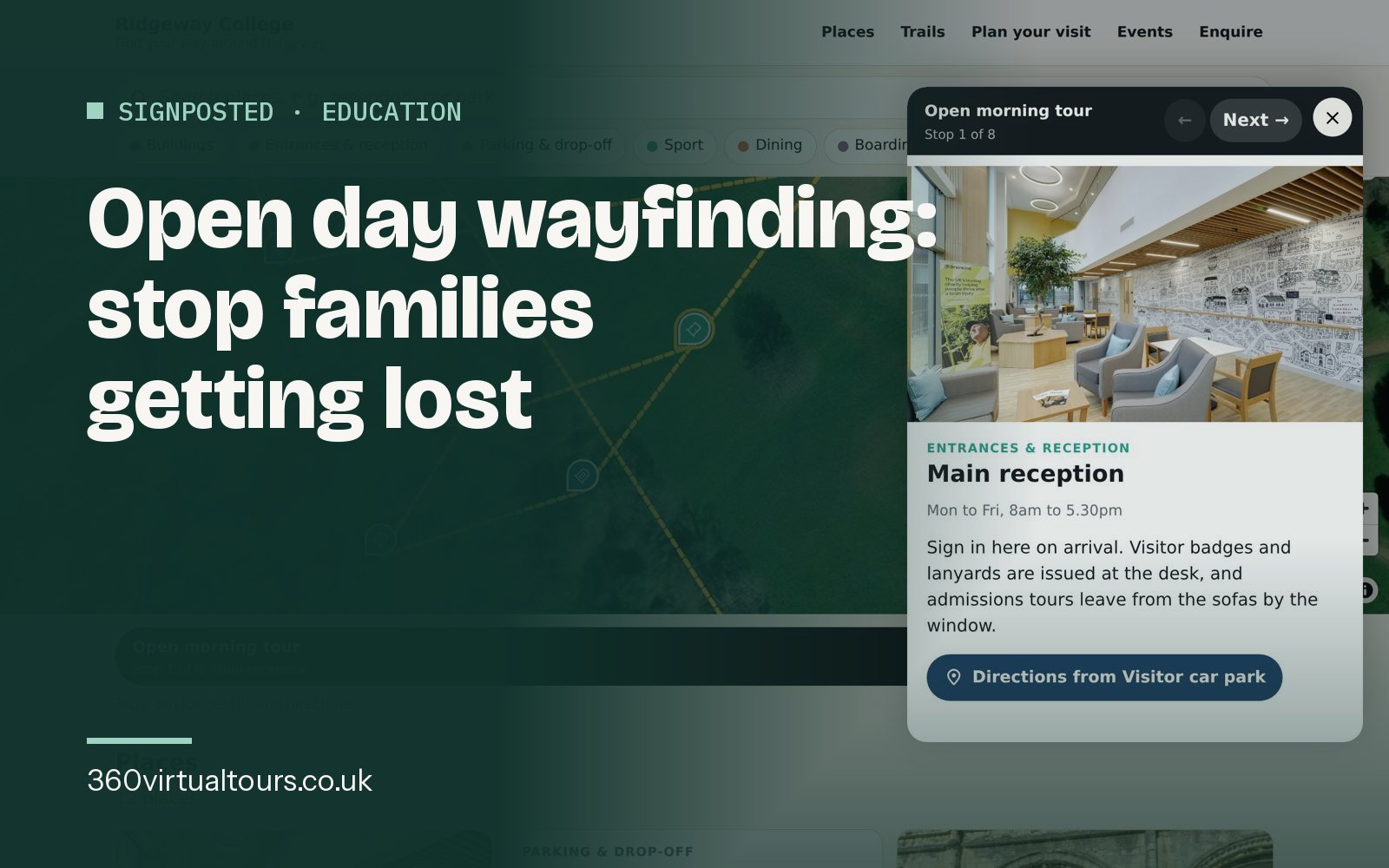
A trail is an ordered route with a time estimate: the one-hour loop, the two-hour full circuit, the sculpture trail, the children's quest, the step-free route. Visitors pick one, follow it stop by stop with directions to the next, and the kiosk stops being asked how long the lake walk takes. Trails are also how you move people: a quiet north garden gets busier when it is on the trail.
The practical layer
Toilets, the café, the shop, the picnic lawn, the buggy park, the dog-friendly areas, the benches with a view. Each as a place with its hours, filterable in one tap. Put the opening and last-orders times on the café rather than in the description, because that is what people are checking at ten to four.
Three kinds of visitor
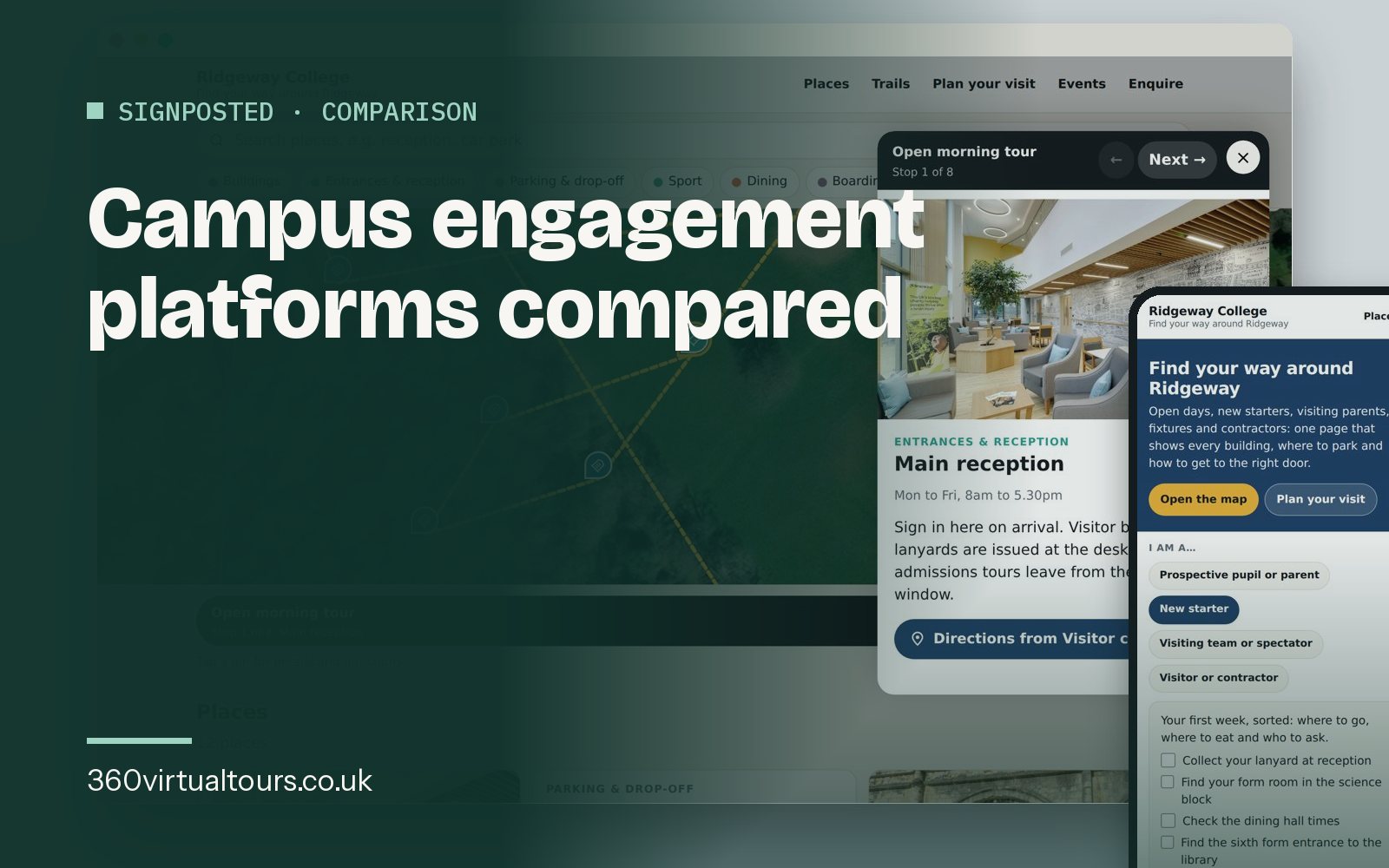
A family day out, a coach group and an accessible visit want different maps. Give each an audience on the page with its own welcome and to-do list: the family gets the quest and the buggy park, the group gets the coach drop-off and the meeting point, the accessible visit gets the step-free trail, the blue-badge bays and the accessible toilets. Our accessible maps guide goes deeper on that last one.
What is on, and what is closed
Seasonal openings, talks, tours and events in date order with a booking link, dropping off as they pass. And the rooms that are closed today for conservation, a wedding or the winter: attach a 360 tour or a Matterport scan and the visitor can still look inside. We have photographed historic houses, museums and gardens since 2008 for exactly that, and the tours drop straight into the page.
Membership and money
The page is read by people who have already paid to be there and are enjoying themselves, which is the best moment to mention membership, the Christmas fair or the donation box. A link in the right place does more than a leaflet at the exit.
Keep it on the gate
Signal is usually best at the entrance, so put the QR code there and on the ticket, and make sure the page loads once and keeps working as the visitor walks into the quiet corners. Then, next spring, when the rhododendrons move the whole site's centre of gravity for three weeks, change the trail from a phone.
Ready to talk about a tour?
Bespoke 360, Matterport 3D or Google Street View: tell us about the space and we will recommend the right format and give you a clear price.